
Honors College
Honors Graduation Regalia | Celebrate Your Achievement
Honors Graduation Cords
Honors students who successfully complete the rigorous 23-hour Honors minor, including the thesis, and maintain a GPA of 3.25 or higher, receive a special notation on both their transcript and diploma. This notation officially denotes them as a “University Honors College” graduate. This distinction greatly enhances the significance of their graduation.
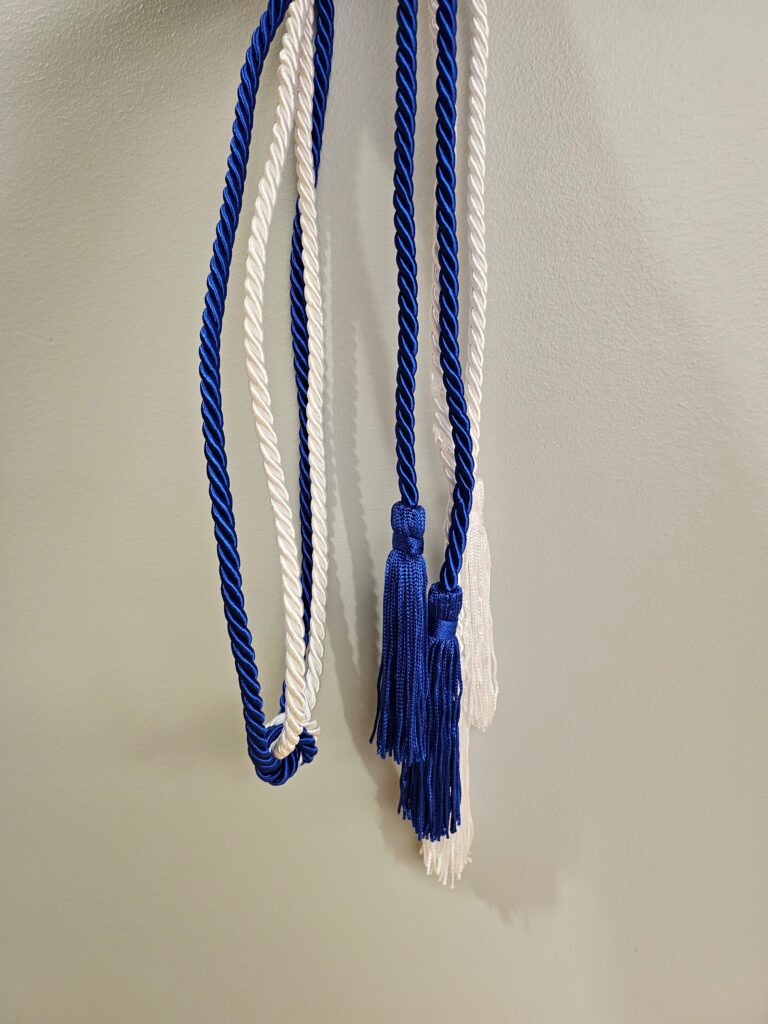
In addition to this academic recognition, the College also bestows a distinctive blue and white braided cord for students to wear at graduation. Moreover, when Honors graduates go to pick up their cap and gown from the bookstore, they will be provided with the cord. It serves as a symbol of their achievement and commitment to academic excellence. This tradition further celebrates their hard work and dedication throughout their Honors journey.
For more details on cords, contact UHC@mtsu.edu.

Thesis Completion Medallion
The College presents this to every Honors student upon successful completion of a thesis. It signifies a milestone in their academic journey towards graduation.

Buchanan Fellow Medallion
The College presents this to Buchanan Freshmen Fellows upon their successful completion of a thesis, marking their path to graduation.

Transfer Fellow Medallion
The College presents this to Buchanan Transfer Fellows upon their successful completion of a thesis. This medallion highlights their accomplishments on the road to graduation.

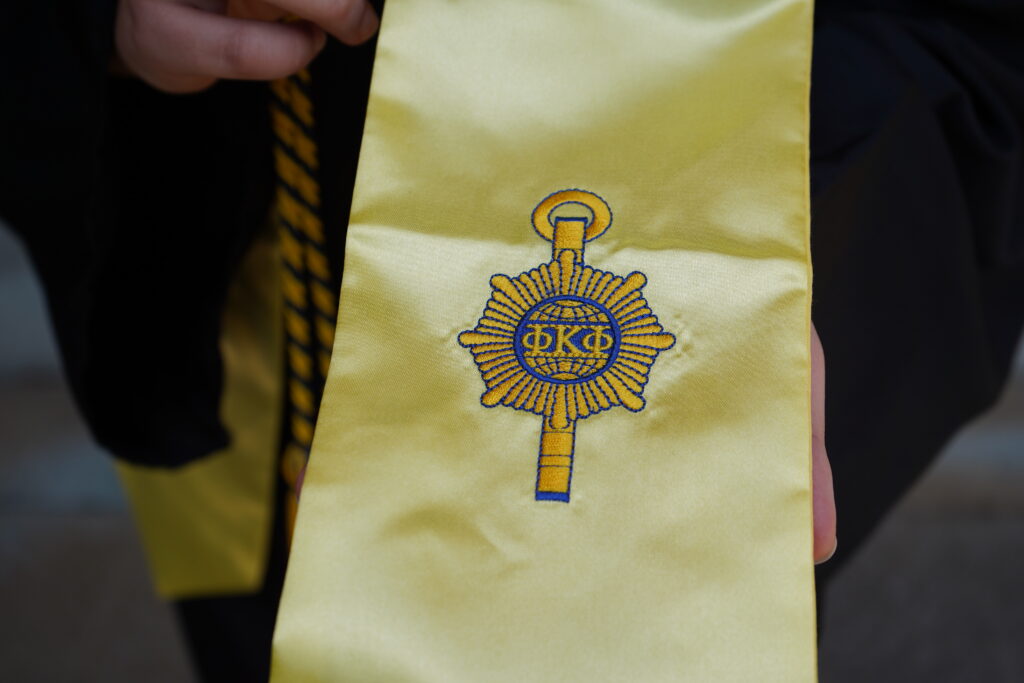
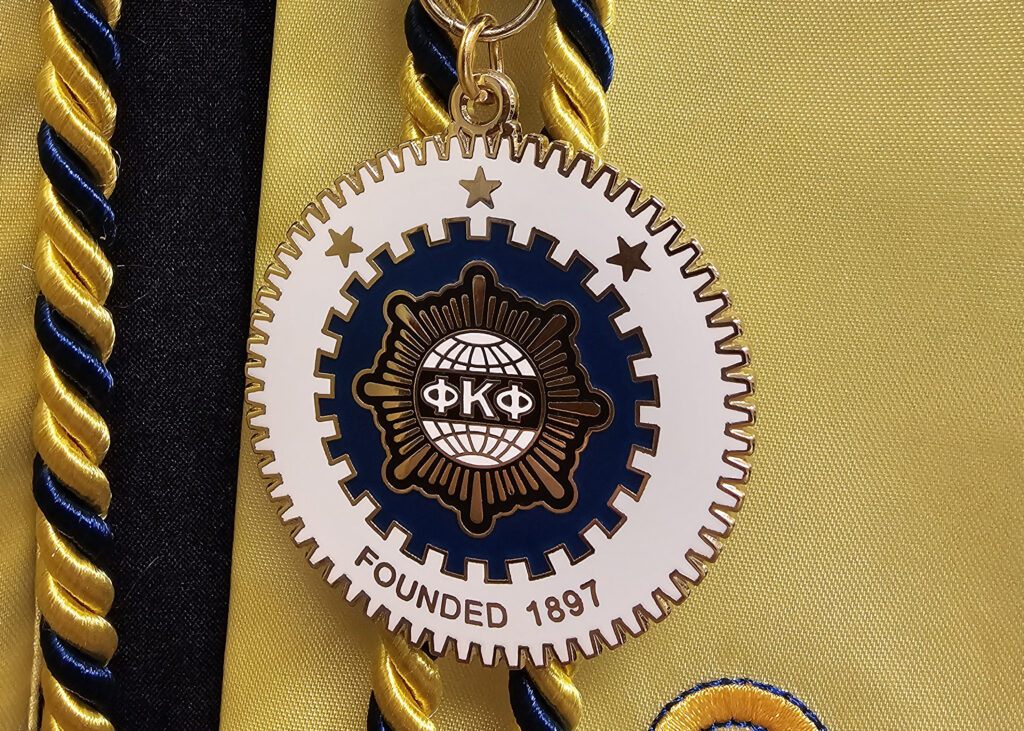
Phi Kappa Phi Graduation Cords and Stole
These items are available for purchase to all members of the Honor Society of Phi Kappa Phi. They enhance the significance of the graduation ceremony with accessories.

Students may purchase one item, or the complete set. To purchase, stop by HONR 205. For more information on graduation items, contact UHC@mtsu.edu.

Omicron Delta Kappa Graduation Cords and Stole
These items are available for purchase to all members of Omicron Delta Kappa Honor Society. For more information on graduation memorabilia, contact UHC@mtsu.edu.


History of Cords and Stoles
The history of cords and stoles at university graduations is rooted in centuries-old academic traditions. These traditions trace back to medieval Europe.
Origins of Academic Regalia
- Medieval Universities: The practice of wearing academic gowns, hoods, and caps started around the 12th and 13th centuries at the earliest European universities like Oxford and Cambridge. Scholars and clerics wore robes similar to those worn by clergy to keep warm in unheated buildings. Over time, the styles became standardized.
- Hoods and Stoles: Originally, the hood was a functional piece used for warmth and to signify the scholar’s degree or faculty. Over time, it evolved into a colorful symbol of academic achievement. Colors and shapes represented different fields of study.
- Cords: The tradition of wearing cords developed later, often used to indicate honors or membership in academic societies. Different colors and combinations began to symbolize various honors, achievements, or affiliations, allowing graduates to display their distinctions visually.
Purpose and Symbolism
- Stoles: Usually fabric sashes worn over the shoulders, stoles often represent membership in cultural organizations, academic honors, or affiliations. These include fraternities, sororities, or community service groups.
- Cords: These braided ropes come in various colors and may be worn singly or doubled. They typically denote honors such as graduating with distinction, membership in honor societies, or specific achievements like leadership or community service.
Modern Usage
- Standardization in the U.S.: In the United States, academic regalia became standardized through the Intercollegiate Code of Academic Costume established in 1895. This code helped formalize gown styles, hood lengths, and colors tied to disciplines and degrees. Cords and stoles became more popular in the 20th century as universities began recognizing a wider variety of student achievements.
- Personal and Cultural Expression: Today, cords and stoles provide graduates an opportunity to celebrate personal identities, achievements, and cultural heritage. They also celebrate membership in various organizations, making graduation ceremonies richer and more personalized.
Follow Us!
Contact Us
Honors College
Paul W. Martin Sr. Honors Building
Campus Box 267
1737 Blue Raider Drive
Murfreesboro, TN 37132
Main Office: HONR Room 205 (Dean’s Suite)
Main Office Phone: 615-898-2152
Email: uhc@mtsu.edu